Some people see walking poles and assume they are only for people who need a little extra support, perhaps because they struggle with balance or find walking difficult.
And yes, poles can be brilliant for exactly those reasons. They can provide extra stability, increase confidence and help people feel more secure when walking.
But that is only part of the story.
Used with the correct technique, poles can turn an ordinary walk into a much more effective full-body workout.
Get more of your body working
Walking with poles can engage around 90% of the body’s skeletal muscles. Instead of relying predominantly on your legs, you bring your arms, shoulders, back and core into the movement too.
That means you can work more of your body while doing something as simple and enjoyable as walking.
Because more muscles are involved, your body also needs more energy. So pole walking can increase the intensity of your walk and calorie expenditure without necessarily making it feel dramatically harder.
They can help you walk faster and further
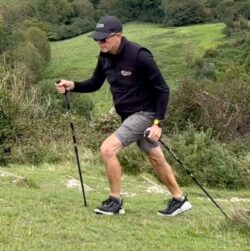
Good pole technique can help improve your walking speed while encouraging an upright posture and good body alignment.
They can be particularly useful on hills. Instead of asking your legs to do all the work, your upper body can contribute too. Many people find this helps them tackle hills more effectively and walk further than they expected.
And poles certainly aren’t just for people who struggle to walk.
Increasingly, endurance walkers and athletes use poles to support performance over long distances and challenging terrain. In the right hands, poles are very much a piece of fitness equipment.
So, who are poles for?
I actually find it difficult to think of many groups of people who couldn’t benefit from learning how to use poles properly.
They can be used to:
- provide additional stability and confidence
- support people returning to exercise
- improve posture and walking technique
- engage the upper body and core
- increase the intensity of a walk
- help with hills and longer distances
- improve walking speed and fitness
- support endurance and performance goals
The important words are “used properly”.
Simply carrying a pair of poles isn’t the same as learning good pole-walking technique. Once you know how to use them effectively, you begin to understand just how versatile they can be.
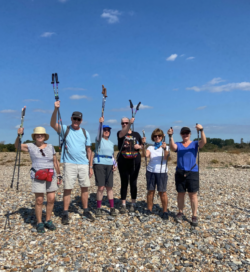
At WALX Coast and Country, we use poles with people of very different abilities and fitness levels. For one person they might provide confidence and stability. For another they might be a tool for improving fitness, speed and endurance.
Same poles. Very different goals.
So if you’ve ever looked at walking poles and thought, “They’re not for me – I don’t need help walking,” it might be time to think again.
You may be surprised by just how much they can add to your walk.