The science of a simple 10-minute effort
This article explores the latest research on vigorous exercise and explains how Total Body Walking benefits your body at the cellular level
Recent research from Newcastle University has revealed something remarkable: even a single, ten-minute session of vigorous exercise can create a “hostile environment” for cancer cells. The study, published in the International Journal of Cancer, found that just ten minutes of high-intensity movement can switch on protective mechanisms within the body, altering the way cells respond to stress and DNA damage.
In this study, 30 adults aged 50 to 78—all overweight but otherwise healthy—completed a brief but intense cycling test. Blood samples taken afterward revealed a surge in the activity of 13 proteins linked to DNA repair. These proteins play a critical role in maintaining cellular stability and preventing the kinds of mutations that can lead to cancerous growths.
The researchers also saw an increase in molecules that reduce inflammation and support vascular health—two crucial pillars of long-term resilience. Gene activity shifted meaningfully: those promoting healthy mitochondrial energy use switched on, while those related to uncontrolled cell growth quieted down.
Dr. Sam Orange, senior lecturer in clinical exercise physiology and lead author of the study, called it a “powerful demonstration” of how little effort it takes for exercise to begin sending positive biochemical signals. “Even a single workout can make a difference,” he explained. “Every session counts.”
In essence, this research underscores a vital lesson: when it comes to protecting your body at the cellular level, quality matters more than quantity.
From lab discovery to real-world movement
The question for many of us is obvious: if lab-tested high-intensity cycling can trigger such cellular benefits, how can everyday exercisers translate that into something accessible and enjoyable? The answer may lie in Total Body Walking—a movement method that merges the simplicity of walking with the physiological potency of full-body engagement.
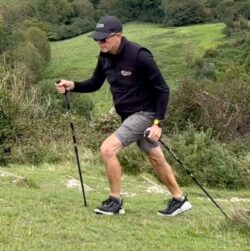
Unlike ordinary walking, Total Body Walking (TBW) involves dynamic use of the arms, core, and upper body, often aided by walking poles or light hand weights. The goal is to distribute the workload across multiple large muscle groups while driving the heart rate into the “vigorous” zone, typically 70–85% of one’s maximum capacity. In practice, this can make a brisk ten-minute TBW session biologically comparable to that cycling test—without the need for gym equipment.
Why Total Body Walking hits the mark
1. Whole-body muscle recruitment
Traditional walking relies primarily on the lower body, while TBW activates over 90% of muscle mass when done correctly. The upper-body motion—whether swinging arms powerfully, using poles, or performing light resistance pulls—stimulates circulation and disperses metabolic work throughout the body. This full-body engagement raises energy demand more rapidly, helping walkers reach beneficial intensity in less time.
2. Enhanced cardiovascular and metabolic response
By integrating rhythmic upper-body action with strong leg drive, TBW engages the cardiovascular system more deeply than standard walking. Participants consistently report higher heart rates and perceived exertion despite similar effort levels, meaning they can achieve greater benefits within shorter sessions. This efficient intensity mimics the metabolic stress that research shows sparks the release of protective proteins and mitochondrial activation.
3. Support for cellular repair and anti-inflammatory activity
Although studies on TBW specifically are ongoing, research across similar modalities—such as Nordic walking and resistance-augmented walking—demonstrates boosts in antioxidant defenses, glucose metabolism, and vascular function. These changes mirror the molecular pathways observed in Newcastle University’s findings: improved oxygen efficiency, lower inflammation, and potential DNA repair activation.
4. Joint-friendly yet vigorous
Many people equate “vigorous” with “high-impact,” but TBW defies that assumption. It allows participants to reach higher exercise intensities through muscle coordination rather than pure speed or force. The poles or arm motions absorb some impact, protecting joints while simultaneously intensifying effort. This makes it a safe option for older adults or individuals with joint concerns who still seek the metabolic benefits of intense exercise.
5. Tailored intensity for every level
TBW’s adaptable nature allows both beginners and experienced exercisers to find their “vigorous sweet spot.” For instance, a novice might alternate two minutes of standard walking with one minute of strong arm drive and faster pacing, repeating for ten minutes. An advanced walker could maintain continuous engagement, adding interval bursts or incline variation for extra challenge.
Linking science and experience
The elegance of the Newcastle study lies in its demonstration of how the body’s internal biology responds almost immediately to movement. TBW offers a bridge between laboratory findings and everyday application—a way to “call up” those same molecular benefits without needing specialised conditions.
When the body performs integrated, rhythmical actions such as those in TBW, the cardiovascular system pumps harder, delivering oxygen-rich blood to every tissue. Meanwhile, the dynamic arm-and-leg coordination creates mechanical tension that stimulates the release of metabolic messengers known as myokines. These tiny signaling proteins have been shown to:
Influence gene expression in distant tissues.
Regulate immune function and inflammation levels.
Communicate directly with the liver, fat cells, and even certain tumor environments.
The Newcastle study indicated that exercise-conditioned blood may influence cancer cell activity, enhancing DNA repair and suppressing rapid replication. TBW—by driving these same systemic responses—could theoretically promote similar cellular defense mechanisms, offering a highly practical, daily health intervention.
A realistic approach to “vigorous”
One of the primary barriers to fulfilling public health exercise guidelines is perception. Many assume that only long or exhausting workouts “count.” Yet studies like this one redefine what intensity can look like: a short, purposeful, whole-body effort may be enough to trigger tangible physiological rewards.
TBW encourages a mindset shift away from endurance-based targets and toward effort-based intention. It turns the everyday act of walking into a form of training that’s vigorous enough to prompt those cellular adaptations—without demanding hours in the gym.
Practically speaking, you might measure your effort using perceived exertion: during a vigorous TBW segment, conversation should be possible but not effortless. You should feel warmth building through your core and arms, with breathing that’s controlled yet deep. Ten minutes like this, two to three times a day, can easily meet recommended activity thresholds and amplify total daily energy output.
Making it part of your wellness routine
The beauty of TBW is its versatility. It fits into streets, parks, and even indoor corridors, making it easy to weave into daily life. For those managing health concerns or aiming to prevent them, it can serve as both a training method and a therapeutic practice.
Here’s a suggested 10-Minute TBW Routine tailored to reflect the study’s “vigorous” criteria:
Warm-up (2 minutes): Begin at a gentle pace, rolling shoulders and engaging arms.
Main phase (6 minutes): Increase stride length, implement the Tri-Motion™ method of Total Body Walking and engage your core so motion feels deliberate and strong. Maintain a pace that elevates your breathing to the point where full sentences become difficult.
Cooldown (2 minutes): Ease back to normal walking, focusing on posture and deep exhales.
Over time, these intervals can be extended or repeated, but even a single focused 10-minute burst already mirrors the activity length that produced such striking cellular changes in Newcastle’s research.
Total Body Walking benefits for cellular health
Exercise science continues to evolve, but messages like this are refreshingly consistent: our bodies don’t require marathon efforts to benefit from movement—they require consistency, intent, and intensity. Total Body Walking delivers all three.
By engaging more muscles, optimizing oxygen use, and elevating heart rate efficiently, TBW aligns perfectly with the mechanisms through which short bursts of vigorous activity improve health at the most fundamental level—the cell. For older adults, people recovering from sedentary habits, or anyone needing an accessible yet powerful exercise format, it offers a science-backed way to act on the latest research findings.
Each 10-minute session is more than a workout; it’s a mini biological reset. It reinforces resilience, supports DNA repair, and activates the body’s natural defences—all through something as inherently human and simple as walking